
Vocabulary is one of those topics that can be made to be one of the most dry and uninteresting topics similar to learning history only through memorizing dates and names of people. OR, it can be spiced up a little with some fun and interesting words thrown in there that expand your child’s vocabulary above the norm of modern conversation.
There are a plethora of resources out there that can do this from adventurous read alouds that aren’t just dribble to word focus games and reel channels. Here are a few that helped expand my children’s word horizons as they grew.
This post contains Amazon affiliate links, which means I receive a small commission, at no extra cost to you, if you make a purchase using links provided. Please see my disclosure page for more details.
Interesting and wordy books
I don’t know how many young children have learned to read through Calvin and Hobbes, but I know in our house it was a majorly important factor in engaging my son to read. What you might not realize is just how many “big” and interesting words are liberally spread throughout the stories– some fanciful and some legit. Take words straight out of the Calvin and Hobbes stories and make a fun vocabulary list. While I do not support the cartoon series of Fancy Nancy at all, the original books are a fun way to sprinkle in sparkly new words. The classic Winnie the Pooh books are always a win for the littles.
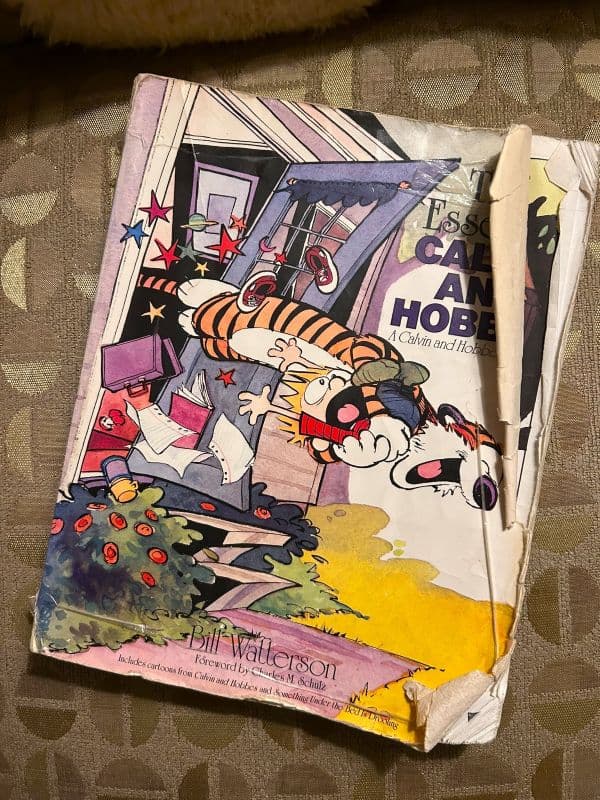
Our copy is pretty worn out.
Weighty older classics have a slightly different way of speaking that sprinkles in words that are still useful to know but don’t always come up in every day language. Treasure Island, The Hobbit, Wind in the Willows, Little Women, Emma M. Lion, or anything by Jules Verne or Jane Austen are prime examples to pull words from. The Greenglass House was very interesting for short phrases such as, “Lashings of nourishment” and “Tome of Inutterable Algorithms”. Note: We did not like the sequels to the this book (they ventured a bit too druidic for our taste) but the first book was very good.
Fun engaging words for the olders
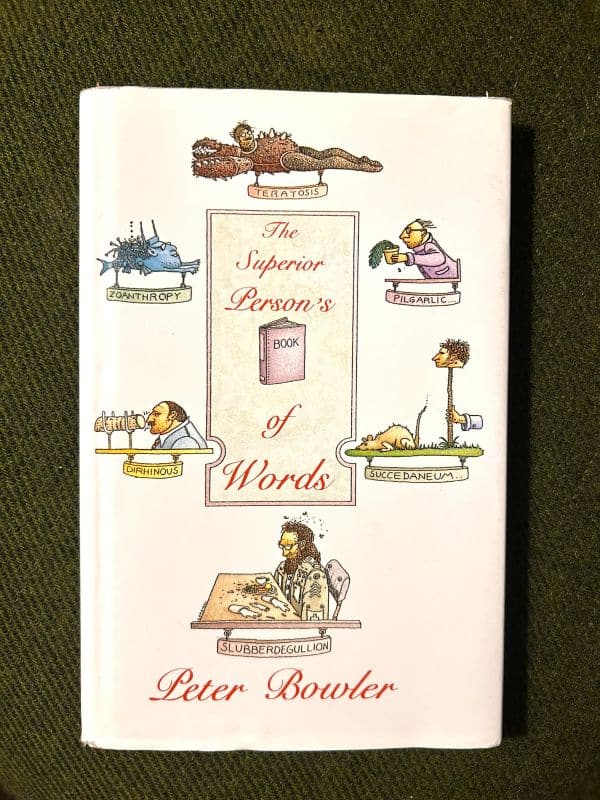
Story books have an advantage over memorizing lone vocabulary lists because you see the words used in context and meaning. Sometimes though a good vocabulary book or channel to watch can add some interest as well. This book is useful and humorous at the same time. My daughter has claimed it for her shelf even though she’s graduated now.
The English Enjoyed channel is hilarious! He focuses on expanding your words to be more interesting and specific from a British perspective. He has a huge collection of words to “use instead” as well as situational videos e.g. detectives, how to leave without insult, etc. I think he would be one the best English teachers out there.

Vocabulary doesn’t always need to be practiced through paper tests
If you are willing to be put in a little bit of planning, there are multitudes of ideas for shaking up how to practice vocabulary. Some don’t take much time at all to put together. Here are a few ideas:
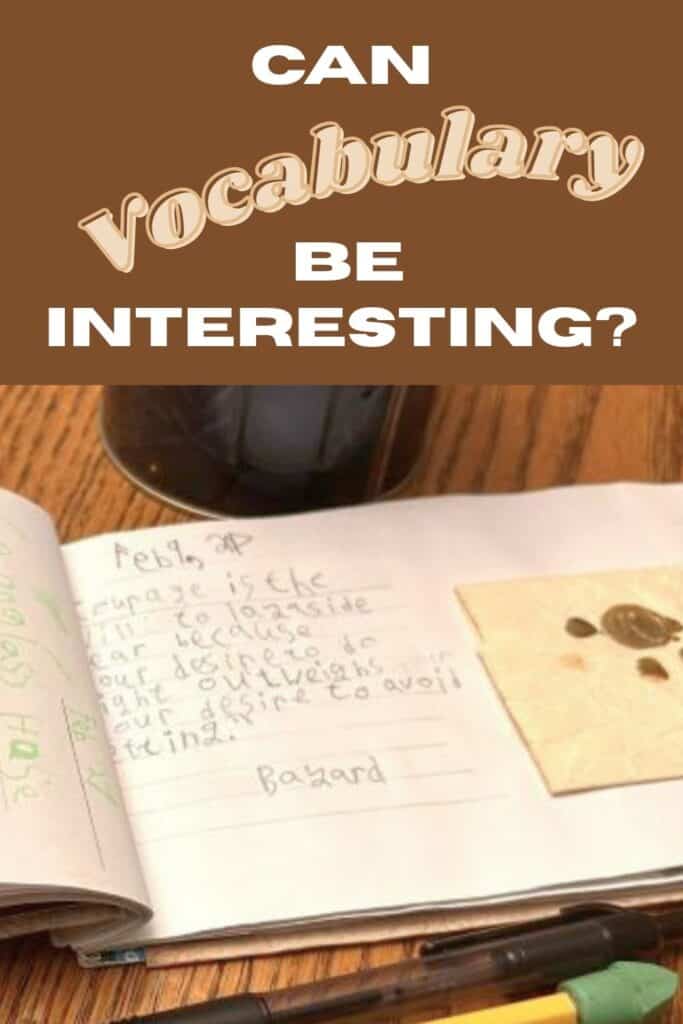
- Take words from the book you’re reading and highlight them in a half sized blank notebook that is covered with kid specific decorated scrap paper. Use one side to learn to draw an element from the story and then use the other side to practice writing or record vocabulary from the story. It can also be used to add in some narration or dictation from the book.

We used cereal boxes for the cover with some thicker scrapbook paper and plain printer paper for the inside. Use a rubber band through the holes and a paper clip to hold it together so you have the ability to add more pages as you go.
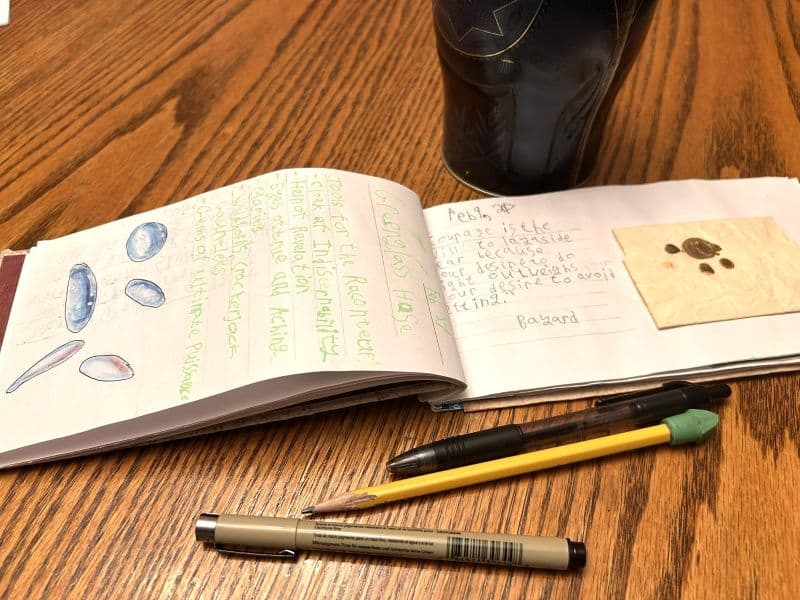
This page had a book quote and we added a roughed up secret letter to mimic the book. On the left, we learned how to draw gemstones as well.
- Use quizlet, Kahoot if you have more than one child playing and they like their phones, or Quizizz (now Wayground).
- Postcard travels: print out some vintage postcards on card stock and have your child write a short travel note using the vocabulary word as if they are a traveler writing to a friend.
- Make meme collages or posters- your middle schooler or high schooler is already communicating through memes on their phones, why not harness that into a fun meme collage? Find the perfect set of memes to reflect the meaning of the vocabulary word and/ or its synonyms, save in the phone’s photo roll and upload into a collage maker app. Print out on regular printer paper.
- Build in Minecraft: use blocks to build the word so you can see it from the air. Using creativity to “hide’ the word or put it out in the field for all to see on a grand scale.
- Scrabble stations: in the style of minute-to-win-it, set up piles of scrabble pieces that consist of one vocabulary word at each station all jumbled up. See how many word stations can be completed in a certain time by figuring out which vocabulary word the station Scrabble pieces spell out from the vocabulary list.
- Learn the word in a different language. Using a language learning app like Mango, have fun learning the word in a vastly different language. When you have your list of foreign words, the words can be uploaded to make a word cloud from Canva’s word cloud generator or Freewordcloudgenerator. You can even have fun learning a few Latin phrases. If you are a fan of the Emma M. Lion series, you can download a DIY “Latin for the Unrepentant” template.
- Classic games such as bingo and scavenger hunts are great ways to break up the desk work for vocabulary.
If you enjoyed this article, you might be interested in these:

